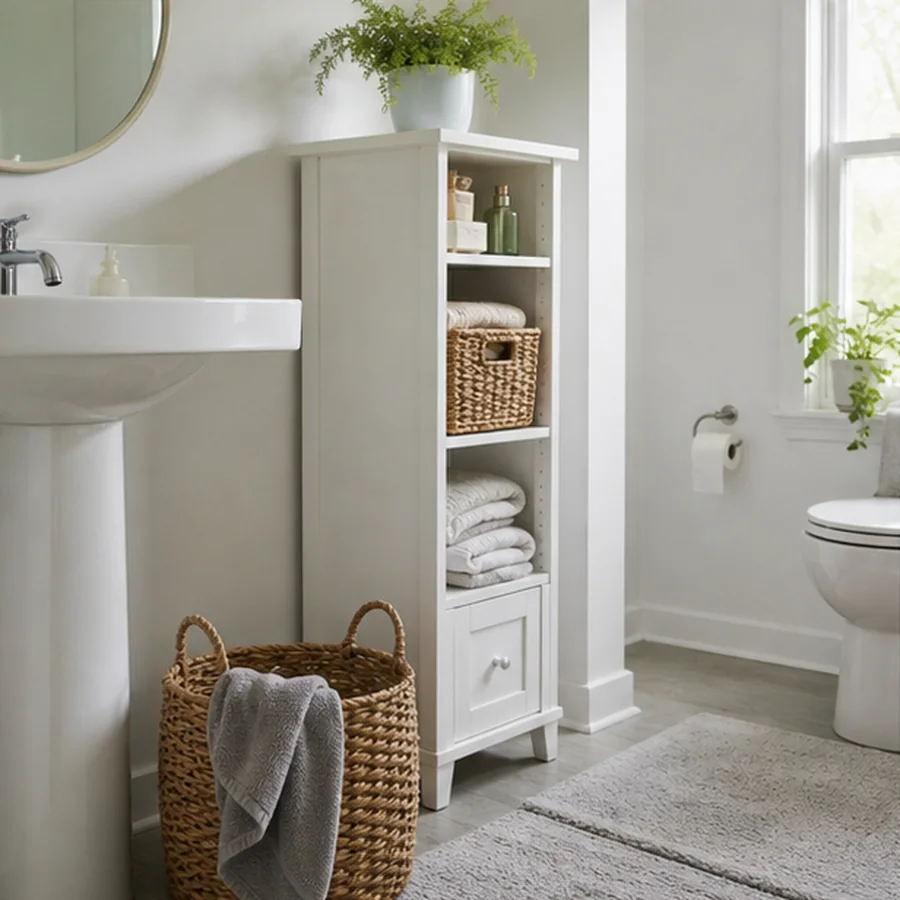
The best home decisions begin with an ordinary moment. A balanced plan for daily items, backups, towels, and visual breathing room. That is the lens for this guide: not a showroom, but a home with routines, limited storage, changing weather, and people who need the space to work.
Start with the life happening here
Picture the busiest version of this space. Notice who moves through it, what gets carried in, where water or dirt appears, and what has to happen quickly. A useful purchase supports that pattern instead of creating a new chore. Write down the one frustration you want to remove and the two constraints you cannot change.
What to look for before buying
First, measure obstructions as well as total width. Next, test the routine with boxes you already own. Finally, buy modular pieces only after the category count is clear. Compare construction, care instructions, return terms, and replacement parts. A lower price is not a bargain if the size is wrong or the finish cannot handle the way your household uses it.
CHECK CURRENT OPTIONSA realistic setup plan
Clear only the area you need, take photos, and record measurements in your phone. Use painter’s tape or cardboard to mark the footprint. Live with that outline through a normal weekday. Check doors, drawers, walkways, outlets, sun, and cleaning access. This small rehearsal catches more problems than reading another dozen product descriptions.
Where value usually shows up
Spend on the feature you touch or maintain most often: a stable frame, comfortable grip, washable cover, reliable fitting, or straightforward filter. Save on decorative extras that can be added later. Neutral, repairable basics tend to adapt when rooms and routines change.
Who should choose a different route
Skip the purchase for now if measurements are uncertain, maintenance already feels unrealistic, or the item solves only a staged-photo problem. Borrow, repurpose, or try a smaller version first. For rentals and shared spaces, confirm installation limits before ordering.
Our practical shortlist method
Choose three candidates: the simplest adequate option, the durable upgrade, and the compact or flexible alternative. Eliminate anything that fails a non-negotiable measurement. Then compare care, warranty language, verified specifications, and total ownership cost. Check the current merchant page before purchase because availability and specifications can change.
Before-you-buy checklist
- Fits measured width, depth, and clearance
- Materials suit moisture, sun, pets, or frequent cleaning
- Setup and ongoing care are realistic
- Replacement parts or consumables are available
- Return policy works for a fit-sensitive purchase
Common questions
Should I buy the cheapest option first?
Usually, buy the least expensive option that meets every non-negotiable requirement. Extremely low prices can be false economy when fit, stability, or replacement parts matter.
How many products should I compare?
Three well-chosen candidates are usually enough: a baseline, a durable upgrade, and a space-saving alternative.
When should I wait?
Wait when you have not measured, when seasonal use is ending, or when the purchase would force several unplanned companion purchases.